Why Strong Project Execution Does Not Guarantee Business Performance

In the construction industry, companies often take pride in their execution capability.
Projects are delivered.
Sites are managed.
Teams are experienced.
From the outside, everything appears to be under control.
Yet internally, many companies struggle with:
- Inconsistent project performance
- Unpredictable financial outcomes
- Repeated operational issues
This reveals a fundamental paradox:
Strong execution does not necessarily lead to strong business performance.
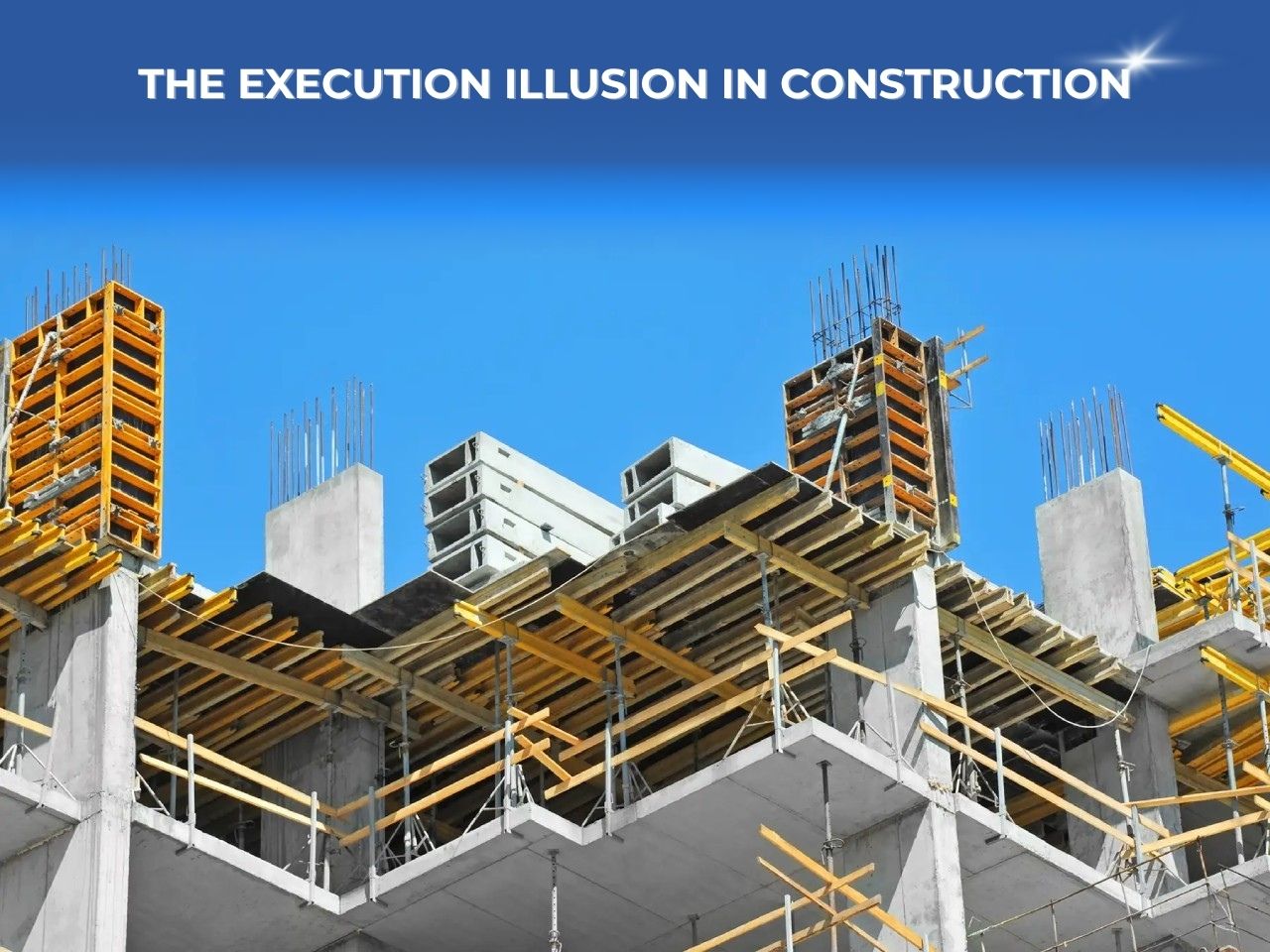
This is what can be described as the execution illusion in construction.
When Execution Becomes the Only Focus

In many construction companies, performance is evaluated primarily through execution:
- Was the project completed?
- Was the site managed effectively?
- Were technical requirements met?
While these are important, they only reflect individual project success.
They do not reflect organizational performance.
Because business performance depends on:
- Consistency across projects
- Predictability of outcomes
- Control over risks at scale
Execution alone cannot guarantee these.
The Gap Between Project Success and Business Success

A company can deliver multiple successful projects and still face problems:
- Cash flow instability
- Margin erosion
- Resource overload
- Increasing operational complexity
This happens because:
Projects are optimized individually.
But the business operates as a system.
Without system-level control:
- Success is not repeatable
- Risks accumulate across projects
- Performance becomes volatile
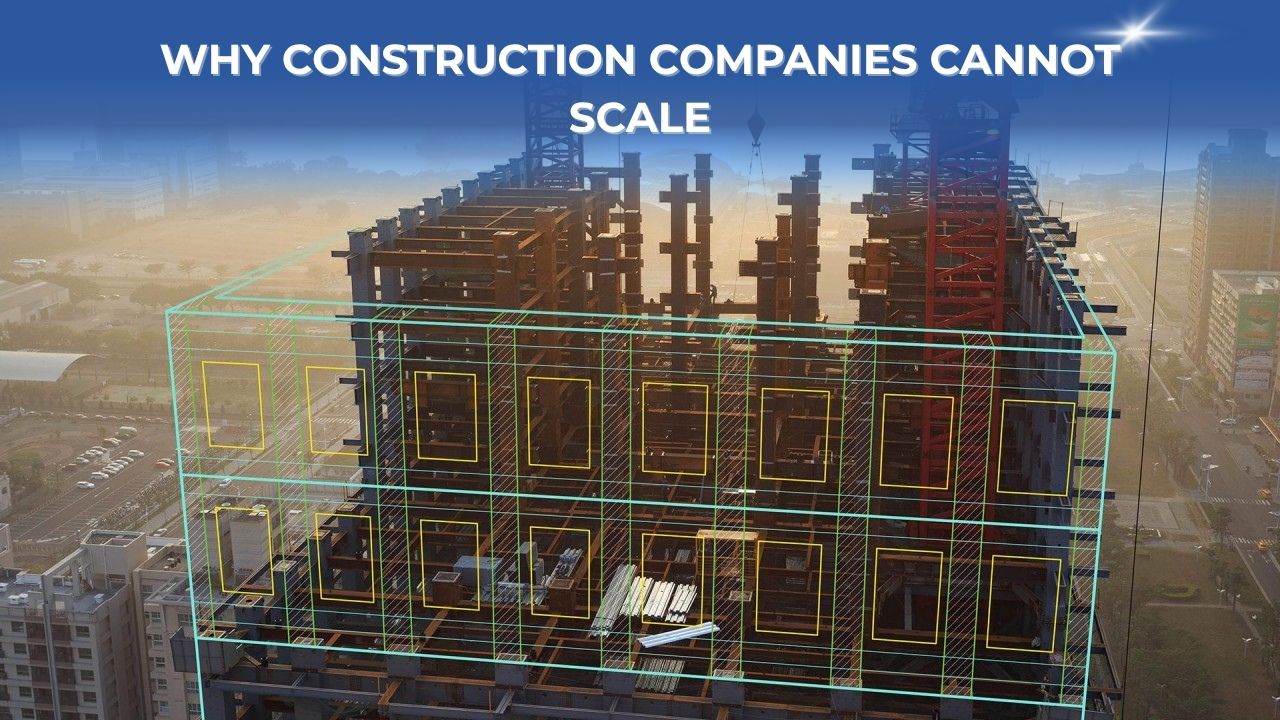
Why Execution-Driven Organizations Struggle to Scale
Execution-driven organizations rely heavily on:
- Experienced project managers
- Site-level problem solving
- Reactive decision-making
This model works at small scale.
But as the organization grows:
- Complexity increases
- Dependencies multiply
- Variability expands
Without structural systems:
Execution becomes harder to control.
And performance becomes less predictable.
The Missing Layer: System-Level Control

What most construction companies lack is not execution capability.
It is system-level control.
This includes:
- Standardized project structures
- Integrated data systems
- Portfolio-level visibility
- Governance mechanisms
Without this layer:
- Each project operates independently
- There is no consistent control
- No learning across projects
From Execution to System Thinking
To move beyond the execution illusion, construction companies must shift their mindset:
From:
Managing projects → Executing tasks
To:
Designing systems → Controlling outcomes
This requires:
Standardization
Projects must follow consistent structures.
Integration
Data must flow across systems.
Visibility
Leadership must see patterns across projects.
Governance
Decisions must be guided by system-level rules.
Platforms like IBOM support this shift by enabling structured project management across the organization.
The Future of Construction Leadership
In the future, construction leadership will not be defined by how well companies execute projects.
It will be defined by how well they design systems that allow projects to perform consistently.
Because the real challenge is not:
“How do we execute better?”
But:
“How do we build a system where execution becomes predictable?”
Đỗ Hữu Binh
CEO, ISOFT
This article is part of a professional series analyzing construction project management and cost control strategies.
© 2026 Đỗ Hữu Binh. All rights reserved.
Any citation or reuse of this content must clearly state the source and author.