There is something very interesting happening in the construction industry today.
Many companies already invest heavily in management systems:
- project management software
- dashboards
- progress reports
- cost tracking systems
- planning departments
- supervision teams
- weekly coordination meetings
- KPI systems
On the surface, everything appears highly organized.
But in reality, many projects still face the same familiar problems:
- schedule delays
- cost overruns
- slow issue resolution
- constant firefighting
- operational confusion on site
- leadership reacting too late
What is surprising is that most companies still misunderstand the real reason behind these problems.
Many assume the issue comes from:
- weak employees
- poor subcontractors
- market difficulties
- complex project conditions
- owner changes
Those factors may contribute.
But they are usually not the root cause.
The biggest blind spot in modern construction management is this:
companies cannot truly see the execution reality happening on site.
In other words:
many companies manage through reports,
while failing to see how the project is actually operating in real life.
And this is where many project problems truly begin.
1. Companies See Reports — But Not the Real Operational Reality

Most construction companies today already generate enormous amounts of information:
- progress reports
- manpower reports
- material reports
- financial reports
- meeting minutes
- site photos
- quality records
- construction logs
- execution schedules
The industry does not lack data.
The real problem is that most of this information only describes:
what has already happened.
But leadership actually needs to understand:
what is happening right now on site.
These are completely different things.
For example:
A report may show:
- progress is still acceptable
- costs remain under control
- issue counts are still manageable
Everything may appear stable.
But the real site conditions may already be changing:
- a critical work package is slowing down
- key materials have not arrived
- subcontractors are losing manpower
- unresolved issues are accumulating
- design revisions have not reached execution teams
- coordination between teams is breaking down
At first, these signals are small.
But when companies fail to detect them early,
the entire project gradually begins drifting out of control.
This is the blind spot many companies never truly see.
Why Project Reports Always Look “Correct” While Reality Is Already Failing
2. The Most Dangerous Situation Is When Everything Still “Looks Fine”
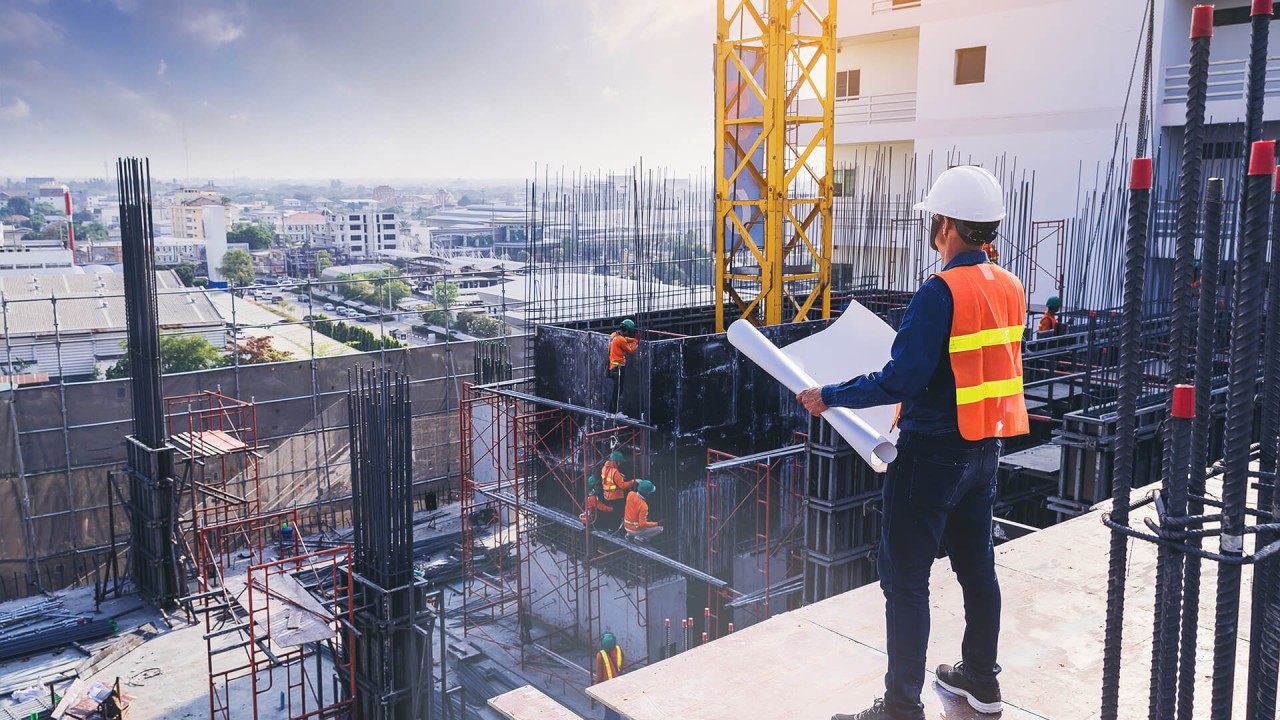
This is one of the most dangerous realities in construction management.
Before major project failures happen, projects often still appear normal on the surface.
Dashboards remain green.
Reports still look acceptable.
Meetings continue as usual.
Management still believes the project is under control.
But underneath the surface:
- productivity is declining
- unresolved issues are increasing
- approvals are slowing down
- subcontractors are losing execution rhythm
- material shortages are beginning to appear
- coordination conflicts are increasing
The system has already started losing synchronization internally.
But the company cannot see it yet.
And by the time leadership finally recognizes the problem:
- delays become visible
- costs rise rapidly
- recovery becomes expensive
- emergency coordination begins
At that stage, many companies say:
“The project suddenly went wrong.”
But projects rarely fail suddenly.
The warning signs usually existed much earlier.
Companies simply failed to see them soon enough.
When Does a Construction Project Actually Start Falling Behind?
3. Construction Projects Rarely Collapse Overnight — They Drift Gradually

Most project failures happen progressively.
A small issue remains unresolved.
A decision gets delayed.
A material delivery slips.
A subcontractor slows down.
A work dependency becomes blocked.
At first, these problems appear minor.
But construction projects are deeply interconnected systems.
One small delay eventually affects:
- manpower allocation
- downstream activities
- equipment scheduling
- productivity
- cash flow
- coordination efficiency
This is how projects gradually drift out of alignment.
The problem is:
most companies only notice the final outcome.
They fail to see the operational deterioration while it is still small and manageable.
4. Most Companies Manage Results Instead of Managing Execution Flow

This is a critical difference.
Most companies today mainly monitor:
- completion percentages
- cost summaries
- progress metrics
- KPI indicators
- total issue counts
These are important.
But they only describe:
outcomes.
The real drivers of project success exist inside:
- work coordination
- execution flow
- issue resolution speed
- decision follow-through
- manpower synchronization
- material movement
- operational dependencies
Construction projects succeed or fail because of how execution flows through the system.
When companies cannot see execution flow clearly,
they are forced to react only after problems become visible.
That is why many organizations:
- hold countless meetings
- generate endless reports
- continuously update dashboards
yet still feel that projects are slipping beyond control.
5. The Bigger the Company, the Bigger the Blind Spot
Small projects are easier to feel operationally.
Leadership can physically observe the site.
Communication remains direct.
Problems become visible quickly.
But as companies grow:
- more projects
- more subcontractors
- more locations
- more dependencies
- more execution layers
the operational reality becomes increasingly hidden.
Information starts passing through:
- multiple management layers
- reporting chains
- coordination meetings
- summarized dashboards
During this process, operational truth becomes diluted.
This is why larger companies often suffer from greater execution blindness.
And this is also why execution visibility becomes a critical competitive advantage.
6. Having More Data Does Not Automatically Create Better Control
Many companies believe:
more data equals better management.
But this is often false.
A company may have:
- thousands of reports
- massive databases
- detailed dashboards
- huge document repositories
yet still fail to see:
- where bottlenecks are forming
- which decisions remain unexecuted
- which teams are losing momentum
- which issues are spreading across the project
- where operational risks are quietly growing
This is why many organizations become overwhelmed by their own reporting systems.
Because the real issue is not the amount of data.
The real issue is:
the inability to see operational reality clearly and early enough.
7. Digital Transformation Does Not Begin with Dashboards
This is something the construction industry needs to rethink.
Many companies assume digital transformation means:
- building dashboards
- digitizing forms
- creating reports
- implementing KPIs
But these are only surface-level changes.
Real transformation begins when companies can finally see:
- how work is flowing
- where execution is blocked
- which issues remain unresolved
- where dependencies are breaking down
- which teams are overloaded
- which risks are growing
Once companies can see operational reality clearly,
they can:
- react earlier
- coordinate faster
- solve problems sooner
- prevent crises before they explode
This is where real management value appears.
8. The Future of Construction Management Will Be Real-Time Operational Visibility
The construction industry is entering a major shift.
In the past, projects were managed mainly through:
- reports
- meetings
- experience
- intuition
But future construction leaders will win through:
- faster visibility
- earlier risk detection
- better operational understanding
- real-time coordination
- execution intelligence
The strongest companies in the future will not be the ones with the most reports.
They will be the ones capable of seeing operational reality the earliest.
Đỗ Hữu Binh
CEO, ISOFT
This article is part of a professional series analyzing construction project management and cost control strategies.
© 2026 Đỗ Hữu Binh. All rights reserved.
Any citation or reuse of this content must clearly state the source and author.