
The Commoditization of Construction Execution
Why Execution Capability Will No Longer Be the Biggest Competitive Advantage in Construction
For decades, the construction industry has operated on a simple assumption:
The companies that execute better will win.
As a result, most construction firms have focused heavily on:
- site execution capability
- project delivery experience
- field coordination
- subcontractor relationships
- speed of execution
- problem-solving on projects
For a long time, this was absolutely true.
Companies that could:
- build faster
- manage sites better
- handle project issues more effectively
often gained a significant market advantage.
But the industry is beginning to change.
Construction is entering a new phase where:
execution capability alone may no longer be enough to create long-term differentiation.
This does not mean execution becomes unimportant.
Execution will remain essential.
But in the future:
? strong execution may become the minimum requirement for survival rather than a unique competitive advantage.
In other words:
construction execution is gradually becoming commoditized.
https://isoftco.com/en/construction-leadership-truth-5/1. When a Capability Becomes a Commodity

In every mature industry, certain capabilities eventually become standardized.
At first, they create strong differentiation.
Later, they become expected.
The same thing is now happening in construction.
Historically:
- strong site management was rare
- effective project control was rare
- reliable delivery capability was rare
But today:
- knowledge spreads faster
- experienced talent moves between companies
- project management technologies are more accessible
- subcontractor ecosystems are more mature
- digital tools are becoming standardized
As a result, the gap in execution capability between construction companies is beginning to narrow.
https://isoftco.com/en/the-biggest-blind-spot-in-construction-management-that-90-of-companies-never-see/2. “Being Able to Build” Will Become the Baseline

This is a critical shift.
In many industries, core operational strengths eventually move from:
? competitive advantage
to:
? minimum market expectation
Construction is moving in the same direction.
For example:
- delivering projects on time used to be a major differentiator
- now it is increasingly expected
- cost control used to create separation
- now clients assume it should exist
- digital project management once signaled innovation
- now it is becoming normal infrastructure
This means the market will gradually stop evaluating construction firms only by:
“Can they execute projects?”
Instead, companies will increasingly compete on:
- scalability
- operational visibility
- coordination capability
- decision speed
- portfolio-level control
- organizational intelligence
3. The Real Shift Is Happening in Competitive Logic

This is where the industry transformation becomes deeper.
Many construction firms still believe:
“If we execute better, we will win.”
But when the entire market improves execution capability, execution itself becomes less differentiating.
At that point, competitive advantage moves elsewhere.
The future winners may not simply be the companies that build better.
They may be the companies that:
- coordinate faster
- scale more efficiently
- detect risks earlier
- make decisions faster
- synchronize operations better
- control large project portfolios more effectively
In other words:
competition is shifting from execution capability to operational intelligence.
4. Future Construction Companies Will Compete Through Systems
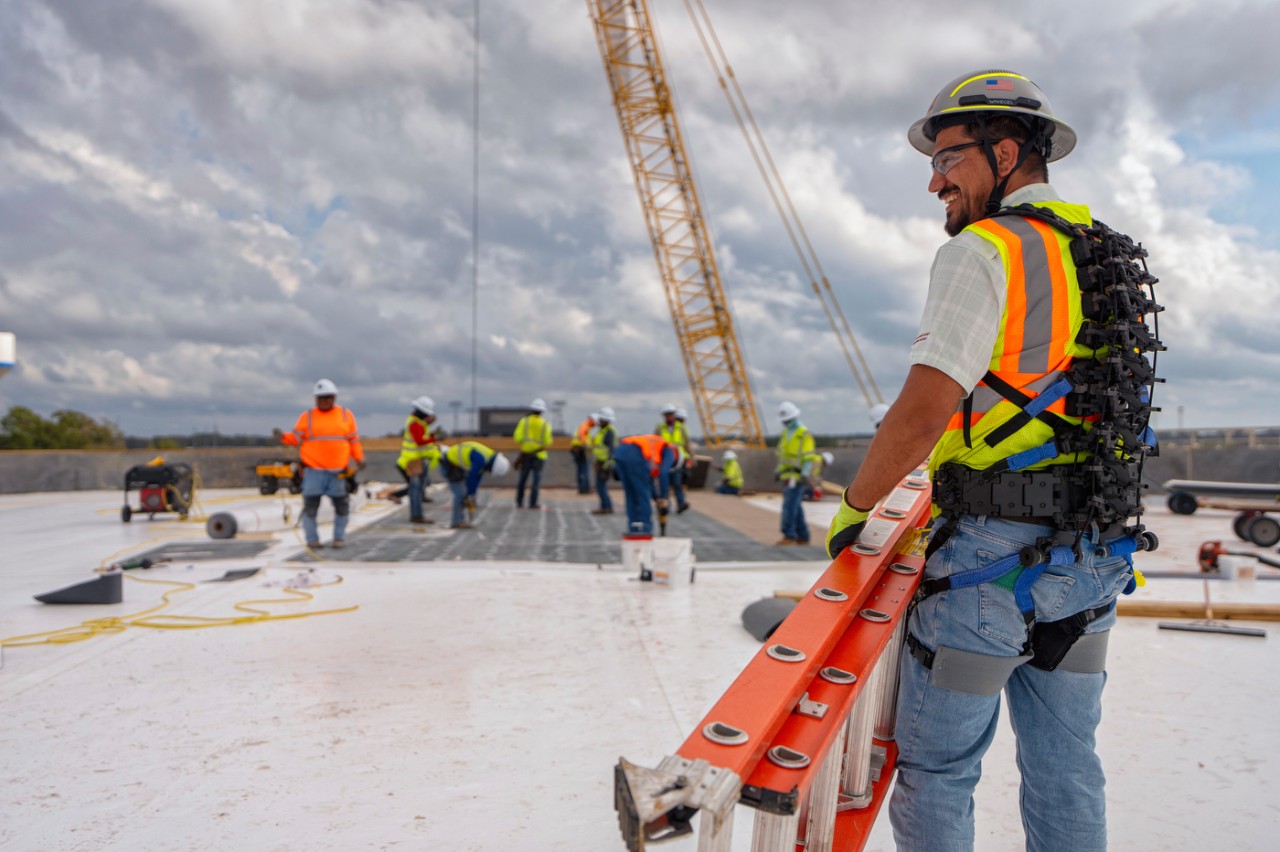
One of the biggest changes happening in construction is that future companies may not differ dramatically in technical execution capability.
The real difference will come from the operating systems behind that execution.
That includes:
- how data flows across the organization
- how quickly decisions are made
- how risks are identified
- how projects are synchronized
- how leadership gains visibility across operations
At that stage, construction firms stop functioning merely as contractors.
They begin operating as large-scale management systems.
This transformation has already happened in industries such as:
- manufacturing
- logistics
- retail
- supply chain operations
Those industries no longer compete primarily through effort alone.
They compete through system design and operational infrastructure.
Construction is beginning to move in the same direction.
5. AI May Accelerate Commoditization Even Faster
Many people believe AI will create massive differences between construction companies.
But there is another possibility:
AI may accelerate commoditization.
Because AI will help spread:
- knowledge
- best practices
- process optimization
- execution methods
- project intelligence
faster than ever before.
This means execution capability itself may become more standardized across the market.
As a result:
Using technology alone will not create sustainable advantage.
The advantage will belong to companies that build stronger operational systems capable of leveraging technology at scale.
6. The New Role of Platforms Like IBOM
In this environment, the role of construction management platforms is also changing.
IBOM is no longer simply:
- project management software
- a reporting tool
- a progress tracking system
Instead, it is becoming:
operational infrastructure for next-generation construction companies.
That means enabling:
- connected operational data
- synchronized workflows
- real-time visibility
- portfolio-level control
- scalable management systems
In the future:
The strongest construction companies may not be the ones with the best individual execution teams.
They may be the ones with the strongest operational systems.
7. The Next Competitive Advantage in Construction
Over the next decade, competitive advantage in construction may no longer come primarily from:
- execution capability
- workforce size
- field experience
Instead, it may come from:
the ability to operate as an intelligent, scalable management system.
The companies that win will likely be those that can:
- scale without losing control
- synchronize operations across projects
- make faster decisions
- predict risks earlier
- optimize portfolio performance continuously
This represents an entirely new level of competition for the construction industry.
Conclusion
The construction industry is entering a major transformation.
In the past, execution capability created clear differentiation.
But in the future:
execution may become a baseline expectation rather than a lasting competitive advantage.
Competitive advantage will increasingly shift toward:
- operational intelligence
- scalable control
- system-driven management
- data infrastructure
- portfolio governance
In other words:
future construction companies may compete more through operational systems than through execution capability alone.
And this may become one of the most important structural shifts the industry has seen in decades.
Đỗ Hữu Binh CEO, ISOFT
This article is part of a professional series analyzing construction project management and cost control strategies.
© 2026 Đỗ Hữu Binh. All rights reserved. Any citation or reuse of this content must clearly state the source and author.