
Why Construction Companies Are Becoming Data Organizations
For decades, construction companies have been defined by their ability to build.
Their competitive advantages came from:
- engineering expertise
- project execution capability
- construction equipment
- subcontractor networks
- site management experience
And for a long time, that was enough.
The companies that could execute projects better often outperformed their competitors.
But something fundamental is beginning to change.
As the construction industry becomes increasingly complex, the ability to build is no longer the only factor that determines success.
The companies that thrive in the future may not simply be the ones that build better.
They may be the ones that understand their operations better.
And that understanding comes from data.
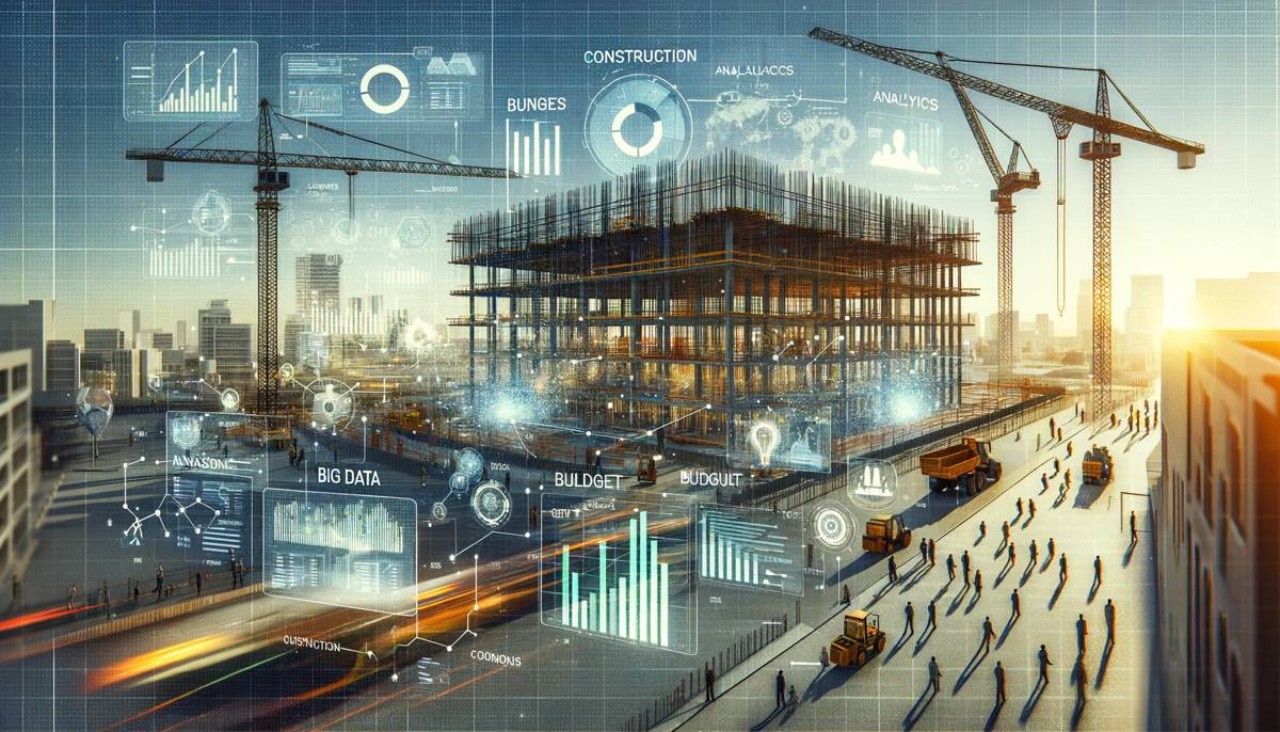
This is why an important shift is taking place: Construction companies are gradually becoming data organizations.
https://isoftco.com/en/the-commoditization-of-construction-execution/Construction Sites Are Massive Data Generators

Most people think of a construction site as a place where physical work happens.
Concrete is poured.
Steel is installed.
Equipment is operated.
Projects move forward.
But beneath all of these activities lies something else.
Every project continuously generates information.
Progress updates.
Cost changes.
Material consumption.
Workforce productivity.
Safety incidents.
Quality inspections.
Contract variations.
Cash flow movements.
Risk indicators.
Every day, thousands of new data points are created across a construction project.
The real question is no longer whether construction companies have data.
The real question is whether they can transform that data into operational intelligence.
https://isoftco.com/en/how-does-a-construction-project-really-operate-from-a-to-z/The Industry's Biggest Problem Is Not Lack of Data

Many construction executives believe they need more data.
In reality, most organizations are already overwhelmed by data.
They have:
- spreadsheets
- reports
- emails
- meeting minutes
- procurement records
- accounting systems
- site logs
- project schedules
Information exists everywhere.
Yet when leadership asks critical questions such as:
- Which project represents the highest risk?
- Which subcontractor is causing recurring delays?
- Which project is likely to exceed budget next quarter?
- Where should management intervene first?
many organizations struggle to answer.
This reveals a critical distinction.
The challenge is not collecting data.
The challenge is converting data into insight.
https://isoftco.com/en/why-construction-companies-will-compete-on-decision-speed-not-execution-speed/Data-Rich, Insight-Poor

Many construction companies suffer from what modern management experts describe as: Data-Rich, Insight-Poor.
Organizations possess enormous amounts of information.
Yet they lack visibility.
They know what happened.
But they struggle to understand what is happening.
And they rarely know what is about to happen.
As a result, leadership often reacts to problems after they appear rather than preventing them before they occur.
This is one of the defining challenges of modern construction management.
Lessons from the World's Leading Data Organizations
Amazon is often viewed as a retail company.
In reality, Amazon's greatest strength lies in its ability to understand and act on data.
Netflix is often viewed as an entertainment company.
Its competitive advantage comes from understanding user behavior better than competitors.
Uber does not own most of the vehicles operating on its platform.
Its value comes from managing data flows across an entire transportation ecosystem.
The common pattern is clear.
These organizations do not win because they possess more data.
They win because they transform data into decisions faster and more effectively.
Construction companies are beginning to face the same challenge.
The Rise of Construction Intelligence
The next competitive advantage in construction may be something entirely different from traditional execution capability.
It may be what we can call: Construction Intelligence.
The ability to understand what is happening across projects in real time.
Not just reporting progress.
Not just tracking costs.
But identifying patterns.
Detecting risks.
Predicting outcomes.
Prioritizing actions.
And supporting faster decisions.
Construction Intelligence represents a shift from managing projects to understanding systems.
From Project Management to Operational Intelligence
Historically, project management focused on controlling individual projects.
Future construction organizations will need something broader.
They will need visibility across entire project portfolios.
Leadership will increasingly ask:
- Which project requires attention today?
- Which risks are emerging across multiple projects?
- How are resource constraints affecting future performance?
- Where should capital and management attention be allocated?
Answering these questions requires more than project reporting.
It requires operational intelligence.
And operational intelligence requires data.
The New Role of Platforms Like IBOM
Traditionally, project management software was viewed as a tool for recording information.
The future role is much larger.
Platforms like IBOM are evolving into operational infrastructures that connect:
- project data
- cost data
- schedule data
- contract data
- procurement data
- cash flow data
When information flows across the organization in a structured way, leadership gains something far more valuable than reports.
They gain visibility.
And visibility is the foundation of better decisions.
Conclusion
For decades, construction companies competed through execution capability.
Execution will remain essential.
But as the industry becomes increasingly complex, the ability to understand operations may become just as important as the ability to execute them.
The future winners may not be the companies that simply build better.
They may be the companies that:
- see earlier
- understand faster
- predict better
- decide sooner
Because in the next generation of construction management:
Data will not simply support the business.
Data will become the business infrastructure itself.
And that is why the future construction company may ultimately become:
A data organization that happens to build things.
Đỗ Hữu Binh CEO, ISOFT
This article is part of a professional series analyzing construction project management and cost control strategies.
© 2026 Đỗ Hữu Binh. All rights reserved. Any citation or reuse of this content must clearly state the source and author.