
Why Construction Companies Will Compete on Decision Speed, Not Execution Speed
In last week's article, we explored a critical shift in the construction industry:
Execution capability is gradually becoming a baseline requirement rather than a sustainable competitive advantage.
For decades, construction companies competed on their ability to build.
The companies that delivered projects faster, coordinated subcontractors better, and solved site problems more effectively often outperformed their competitors.
But as technologies become more accessible, project management practices become standardized, and industry knowledge spreads faster than ever, the gap in execution capability is narrowing.
Execution remains essential.
But being good at execution may no longer be enough.
The next competitive advantage may come from somewhere else: Decision Speed.
The companies that win in the future may not be those that build faster.
They may be those that see faster, understand faster, decide faster, and adapt faster.
https://isoftco.com/en/how-does-a-construction-project-really-operate-from-a-to-z/From Execution Bottlenecks to Decision Bottlenecks

Traditionally, project delays were often associated with site execution.
However, in modern construction organizations, many delays occur long before work begins on-site.
Projects are delayed because organizations wait for:
- approvals
- budget decisions
- design changes
- procurement authorizations
- contractual clarifications
- cross-functional alignment
In many cases, a decision may take ten days.
The actual execution may only require two.
This means the true bottleneck is often not construction itself.
It is organizational decision-making.
https://isoftco.com/en/the-commoditization-of-construction-execution/Why Decision Speed Matters More Than Ever

As execution capability becomes increasingly standardized, companies begin competing on a different dimension:
Their ability to convert information into action.
Consider two companies facing the same issue:
A sudden increase in material costs.
Company A requires:
- multiple reports
- several approval layers
- extensive meetings
Decision cycle: 12 days.
Company B has:
- real-time visibility
- predefined escalation paths
- clear ownership
Decision cycle: 3 days.
Both companies may have identical construction capability.
But their business outcomes will be dramatically different.
Because the difference is not execution speed.
It is decision speed.
The Hidden Advantage Behind High-Performing Construction Organizations
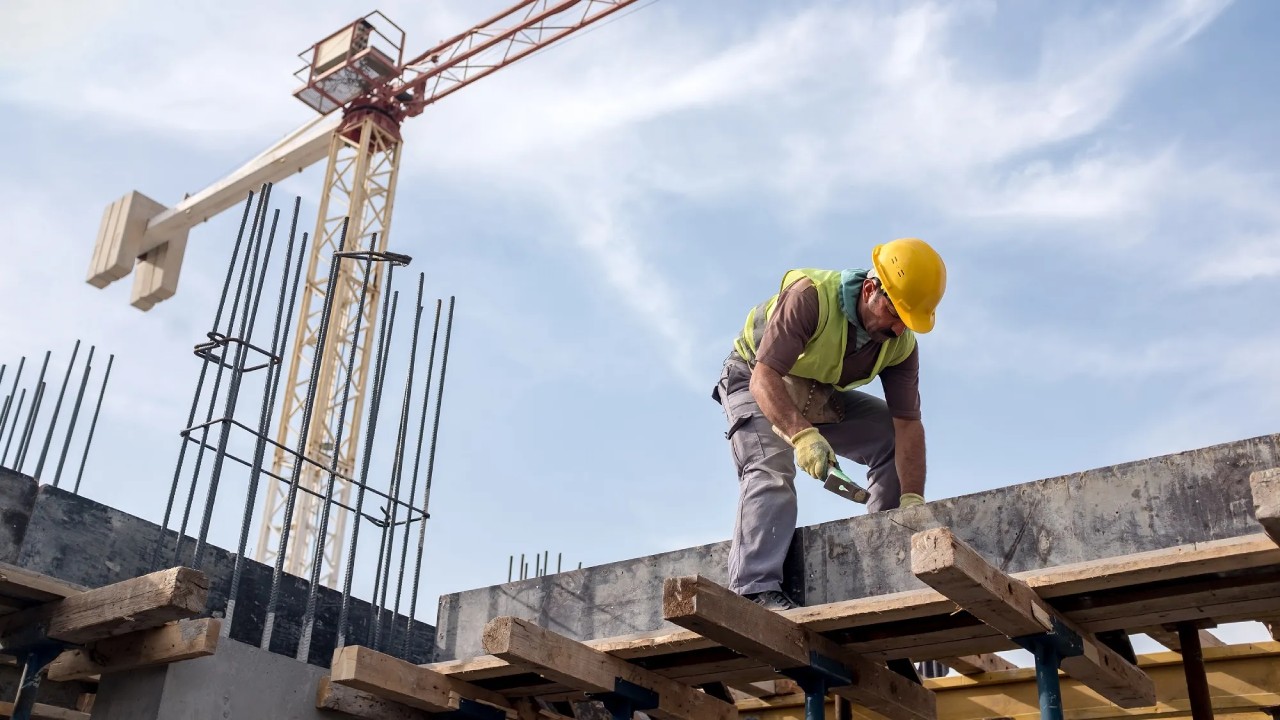
When observing large-scale developers and construction groups, many people focus on their execution capability.
What is often overlooked is the decision infrastructure behind that execution.
Fast-moving organizations typically share several characteristics:
- Clear decision ownership
- Transparent project data
- Defined escalation mechanisms
- Real-time visibility
- Strong governance structures
Their projects move faster because decisions move faster.
Execution speed is often the visible outcome.
Decision speed is the invisible cause.
The New Competitive Logic

Historically, construction companies competed through:
- manpower
- equipment
- project delivery capability
Increasingly, they will compete through:
- decision cycles
- organizational responsiveness
- operational intelligence
- portfolio visibility
- risk anticipation
The future competitive question may no longer be:
"Can we build?"
Instead, it may become:
"Can we decide faster than our competitors?"
Conclusion
Construction is entering a new era.
Execution capability remains necessary.
But it is becoming increasingly difficult to differentiate through execution alone.
The companies that thrive in the next decade may be those that build organizations capable of:
- detecting issues earlier
- understanding them faster
- making decisions sooner
- adapting continuously
Because in the future of construction: Decision speed may become more valuable than execution speed.
Đỗ Hữu Binh CEO, ISOFT
This article is part of a professional series analyzing construction project management and cost control strategies.
© 2026 Đỗ Hữu Binh. All rights reserved. Any citation or reuse of this content must clearly state the source and author.